
It’s been more than ten years now since I walked away from Christianity, with fewer and fewer backwards glances as time has rolled on. But even so, the season of Lent still resonates with something deep in me. In fact, the very first post of this blog was written on the night of the first Easter Vigil I spent apart from the church when I still wasn’t sure if I had the guts to live a life apart from the thing that had defined it so thoroughly up to that point. The last several years of my Christian engagement had been deeply entrenched in the Anglican liturgical traditions, where Easter and her celebrations are paramount. And I embraced them wholeheartedly. I loved the dark, brooding Ash Wednesday services with their physical manifestation on the foreheads of the faithful. I embraced the lenten fast and self-reflection born out of abstention in the physical world. I reveled in the build up to Holy Week, moving eagerly into the emotional cycle of grief at Christ’s betrayal and death and joy at his resurrection.
I hate to define myself as anything now, but when pressed I tend to fall back on the catch-all of agnostic and certainly find myself well within the broad confines of secular humanism. I believe in science, in facts and in the redemptive power of skepticism, rational inquiry and respectful discourse. And despite having eschewed Christianity along with all of her festivals and traditions, I still find that there is a place in life for abstention and reflection. Because, as is intoned in services across the world tonight, “Remember that you are dust, and to dust you shall return.” The phrase, credited to God as he threw Adam and Eve out of the garden of Eden, and used today to remind believers of their fallen state before the perfection of their creator, ironically rings particularly true to those of us who believe neither in the first story or the second framework.
I believe that this life is all we have. We have one chance to make of it what we will, to find and give kindness, and joy, and hope to ourselves and those around us. We have one chance to make the world around us a better place, and fight against the things that make it a bad one. And when our chance is used up, to dust we shall return.
One of the first major hesitations I felt regarding a whole-hearted embrace of Christian theology came when I was confronted with the Pauline idea that all humans are, when left to themselves, depraved creatures, repositories of evil, destitute of anything good. A significant proportion of Christian thought hinges on the belief that God is the only good, and ultimately the only possible source of good in the world. All good comes from God, and can come from nowhere else. I believe that this is a dangerous way to see the world, and in particular a dangerous way to view the people in it. I firmly believe that each person has a capacity for good and a capacity for evil and that finding the balance is a fundamental piece of what it means to be human. And that learning to live with the dichotomy of ‘good’ and ‘evil’ (which are problematic terms themselves) within oneself is part of the adventure and challenge of a life well lived. But this life is all we’ve got to figure out the balance, before we return to our composite elements.
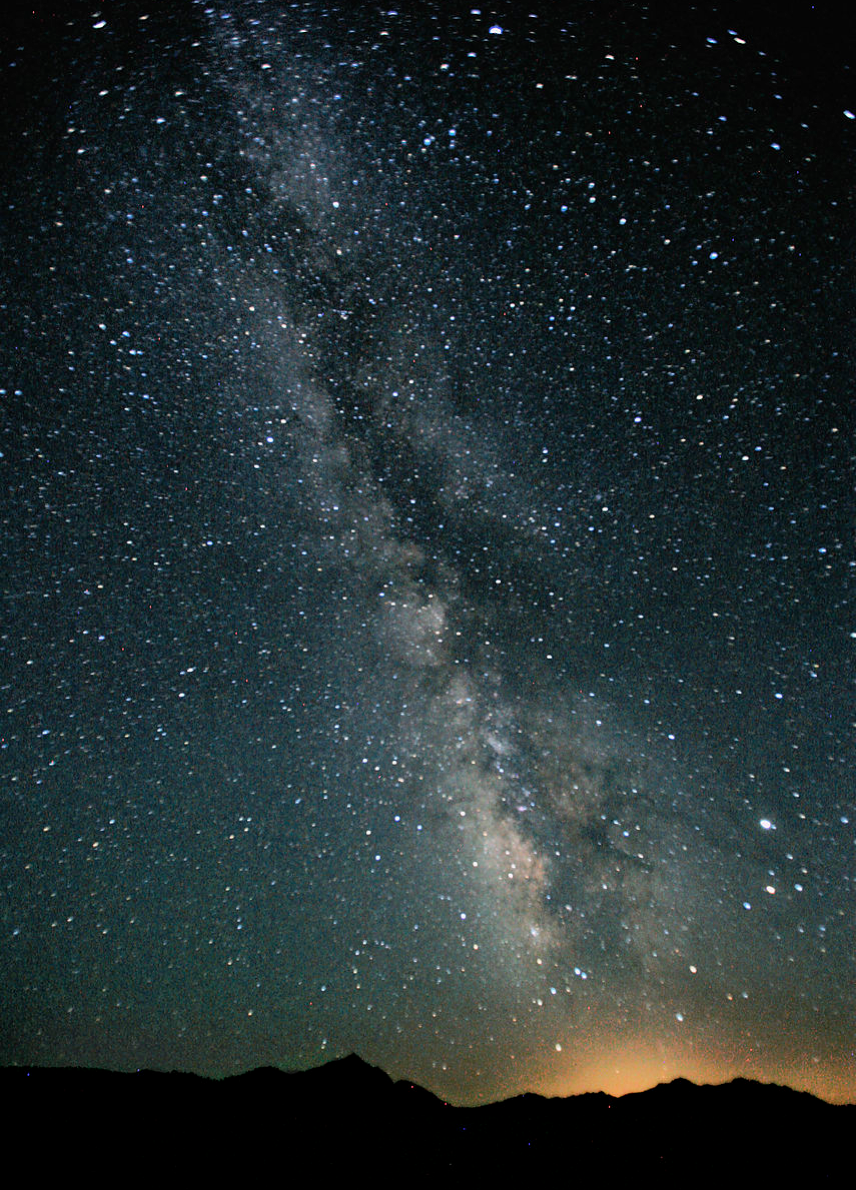
For, as the venerable Carl Sagan reminded us, we are each made up of stardust, after all.
 entelechyproject