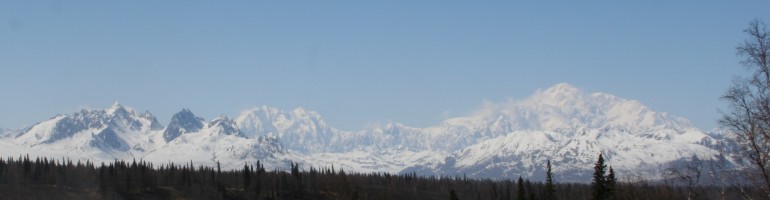
The first day and a half across the Canadian border was more of the same western landscapes I’d been driving through since leaving the Midwest. Rural dirt roads & fences stretching for miles along our route and spidering out to every horizon. Sagging barns, abandoned and rusting farm equipment, tiny one-horse towns with only a slightly reduced speed limit to mark their hold on the side of the blacktop. Road signs for historical points of interest and billboards for politicians and car repair and injunctions not to camp in pull-outs. We passed through the stunning Fraser canyon region of British Columbia with her sheer walls, myriad road tunnels and crystal blue rapids, then endless parched pastureland devoid of wildlife or cattle, finally northern forests rimming fields green and full of horses enjoying the cool early fall air. As we made our way north, birch and aspen turned slowly from green and silver to a deep earthy gold. And still the fences stretched on, boxing us onto the highway and our winding route north. We slept in a hotel in Prince George, next to a sprawling casino, parking lot packed with brand new F250s and chain store icons glowing in a march above the road back to town, dimming the stars. I had been on the road for four days, working my way west and north. And still the landscape seemed the same.
Half a day out of this last gasp of civilization we finally turned truly north onto the Cassiar and just as suddenly as the turn was upon us with her iconic “North To Alaska” sign, we were in the true northwoods. Fences disappeared, towering spruce trees hung over the road blocking out the intermittent sun. Dark clouds, heavy with rain and menace and cold, hung just below bare mountain peaks, occasionally spitting cold showers on the truck and wet road. Hunters sped past us hauling four-wheelers and tarps, heading south and away from the rain and mountains of their weekend. Further north, only spruce held the green, lakes small and immense winked their black depths through the trees. There were no more intermittent towns, no more fences, no more of anything but trees and mountains and creeks and sky.
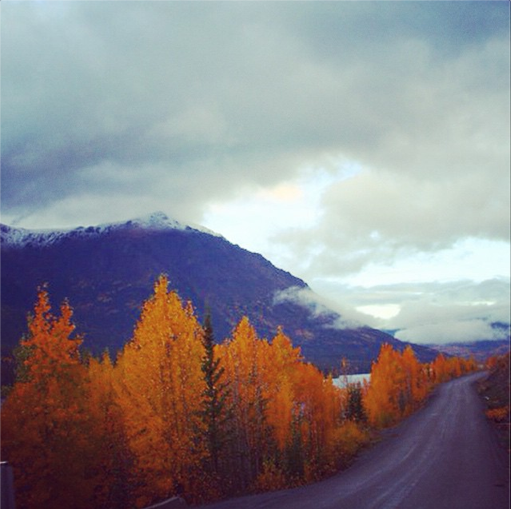
Fall Colors, Northern BC.
And as we turned truly north and the landscape changed so suddenly and irrevocably, I felt something opening up in my chest. There has been a bottling up over the last two years, a building of pressure that I had noticed but tried hard to ignore. There was some release on our last two trips up to Fairbanks, but the subtle underflow of grief and stagnation that has been building for so long and especially in these last months of relocating yet again, leaving a good job, friends, the familiarity of a cityscape mapped out over the last two years in Des Moines, that the true extent of it was beyond me. I wanted, almost needed, to stop the truck and stand on the edge of the wilderness and cry for being back in a place where my soul can uncurl and breathe again.
But there was no stopping. My father, who was tackling the last five days of the drive north with me, asked what I was most looking forward to in being back in Fairbanks, gave me an utterly blank look when I responded, “Just being there. Being in the landscape …” He was expecting a favorite restaurant, or connecting with a particular friend. Being is not in his lexicon, as evidenced by his road-warrior approach to our trip with fast, efficient stops only when absolutely necessary for fuel or food, the latter mostly eaten on the road, and six am departures every morning to pack the most miles into every day. No waysides, no photo-ops, none of the rambling, puttering stops I have become so familiar with in traveling with Peter. He took pictures with his arm sticking out of the truck in the cold wind, snapping away without the benefit of a viewfinder, trying his best to cater to my need for images without slowing our breakneck pace.
So instead of stopping to breathe in the north, to reconcile with being in a place I have missed so fundamentally (and the promise of being there for two months instead of a few days) we hurtled on up the increasingly narrow and pitted road towards the border. As we drove, gold leaves dropped and littered the road, bare branches left reaching for the mountains and the glowering sky. The last day of the trip, we drove into a snowstorm. Most of the day on the road was spent crawling through Kluane Reserve at thirty miles and hour in four wheel drive, snow blowing across the hood of the truck and reducing visibility to a dozen feet at times.
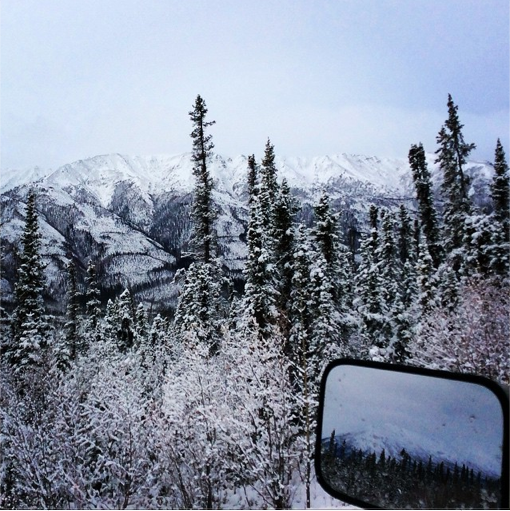
Blizzard, Aftermath. Yukon Territory.
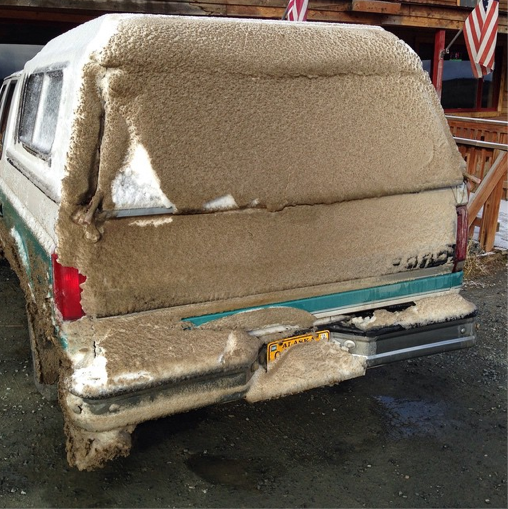
Dirt & Snow after the blizzard.
I sent my dad back south on Thursday and moved into the cabin that will be my home for the next two months that afternoon. It is a cozy little log cabin with a woodstove and a loft, down a winding, narrow track driveway and then a fifty yard hike across a creek and up a small rise, half an hour from town. I woke up this morning to a few inches of wet, early season snow. The ground isn’t frozen yet, and I doubt the snow will stick, but the bliss of waking to the blue-white glow of dawn over ice was delicious. I feel the slow release of the pressure I didn’t realize had built up so much, and maybe this slow release is better. I can feel myself opening up now that I’m here, breathing again, able to be in a way that I haven’t for the last two years. My hands smell like sap and wood from splitting birch and my clothes hold the subtle scent of smoke from blowing coals to life in the woodstove. There are wet boots by the door and contentment in the warm, dry cabin air.
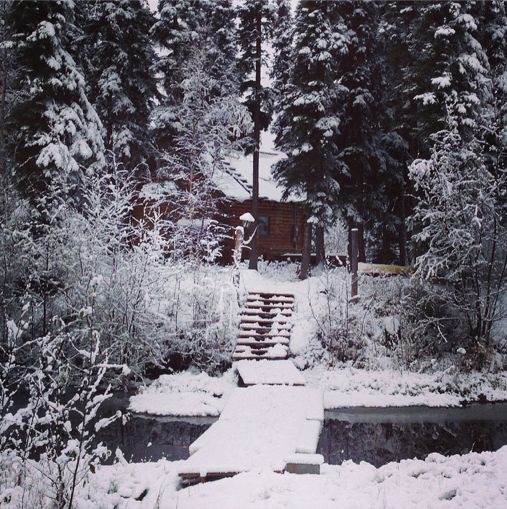
Snowy Cabin Morning
 entelechyproject