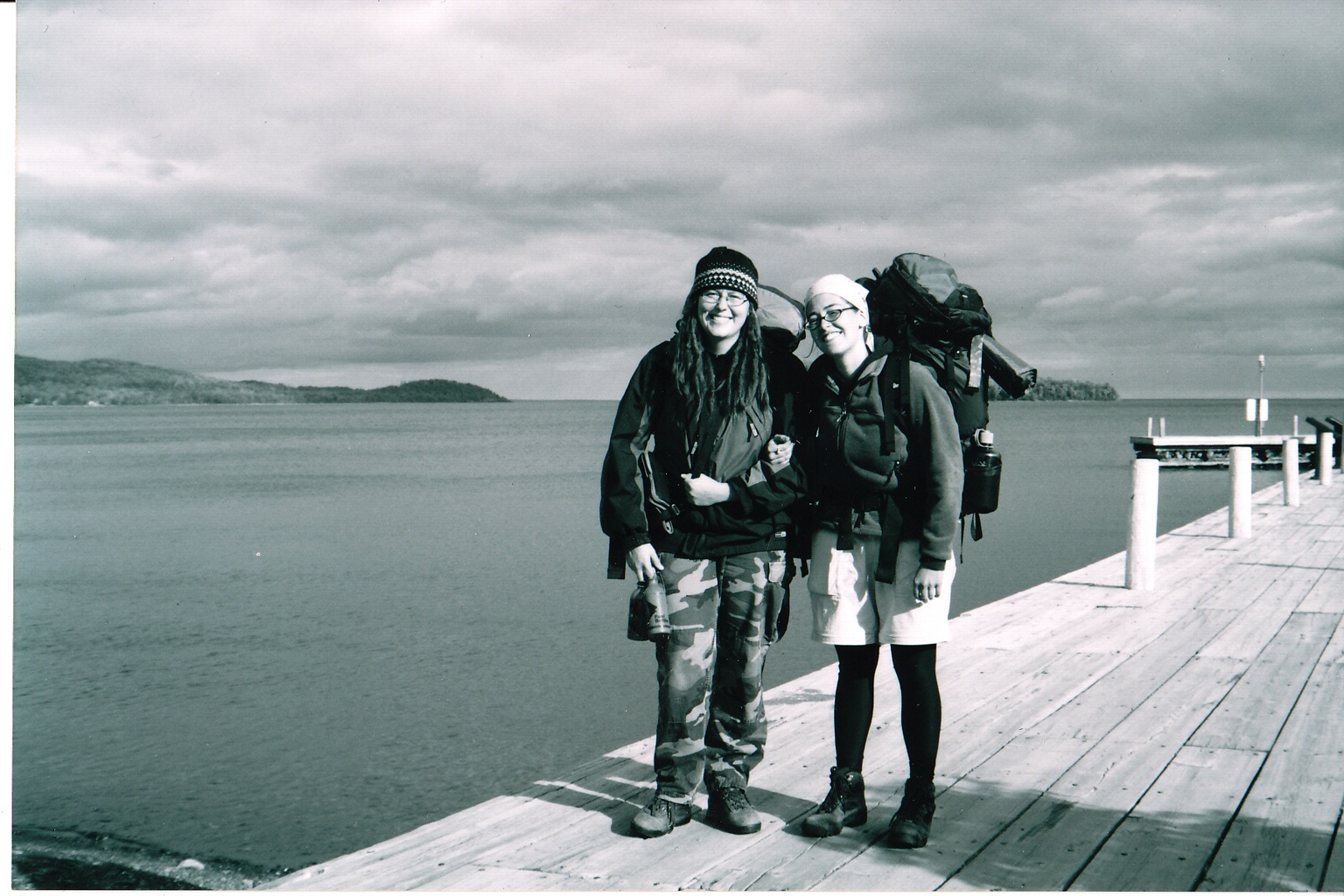
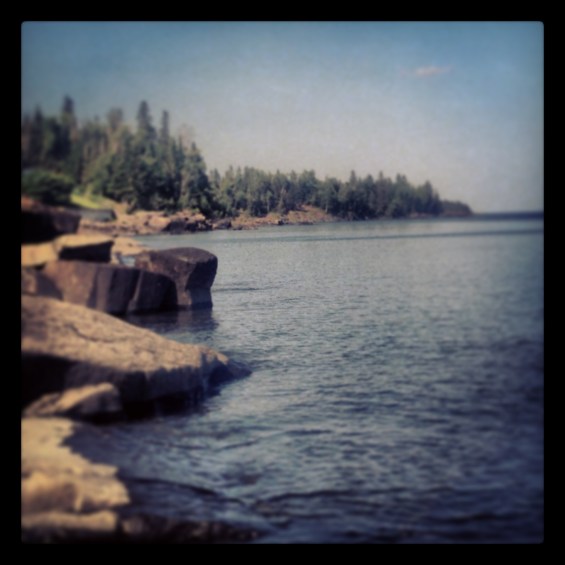
Pete and I were talking yesterday about what attracts us to wild, empty places. What is it about that aesthetic that draws us over and over to the woods, the mountains, the edge of the ocean, to communities perched on the cusps of these things? Being back in the Northwoods, I recalled driving up here ten years ago with Liz on an somewhat ill-fated camping trip to Isle Royale. I had vastly underestimated the time it would take to drive from Chicago the border of Canada on the north shore of Lake Superior, and we ended up, after an excruciatingly long day in the car barreling through the midwest, driving up the coast of the lake near sunset. I was struck by the Northwoods for the first time then, although I did not know that this landscape had a name. My breath was taken away by the thick stands of spruce and aspen and birch, by the vast stretches (they seemed vast, after five years in the tightly packed world of Chicagoland) between tiny enclaves of a few homes and a small convenience store without even a gas station, by the lack of roads and the smallness of the ones we navigated. Back then, I had no context for the north country, for her people, her trees, her trails. The most I had done was a two week backpacking trip in the UP and some time working at a retreat center in northern California as a teenager. I knew I loved and was drawn to the woods, but this was a whole new landscape for me. Yet driving into the gathering darkness on this tiny road towards the ferry to our island backpacking trip, all I wanted in the world was to move here forever. To make this my place, and put my roots down here among the birch. It is no surprise, I suppose, that the siren song of Alaska drew me even further north not a year later.
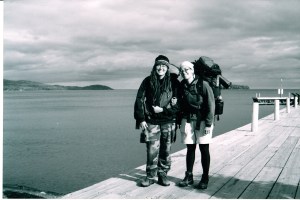
Liz & I after three days on Isle Royale. Summer 2003.
But we come back to that question; What is it about places empty of people that draws us to them? I wondered at first if it is the idea of a blank page, the way I used to accumulate empty journals and notebooks for the possibility what they might hold. But that seems wrong, because in coming into the wild and empty places, I am not looking to fill them with anything new. I think, instead, I am hoping to get lost in them or to get away from the places that are already full of too much. The conversation came around to how we have both, from early ages, felt alienated and apart from our own cultures and places. I have always felt awkward among people, in school as a kid I was on the edges of things, never cool, often laughed at. Shielded from pop-culture by an overprotective mother and scooped into the enclave of a religious youth, I never understood or engaged with the references and enthusiasms of my peers. Beyond this, I have always been horrified by the facsimile of suburban sprawl, by the blind consumption of both goods and media that seems to drive the engine of culture and economy. Maybe I am drawn to places of escape from a world and culture that never seemed to fit. In the woods, I can simply be in a way that is not possible on the asphalt and among buildings and the press of people. The only judge is the wilderness herself, if I can let go of my own self-criticism for a moment. And she is both fair and brutal, but honest, in the end.
In all this discussion, I was reminded of something I penned two years ago (has it been so long, already?) just after we’d moved to Iowa and I took my first trip back to Chicago after so many years away.
Driving into the city, when I came around the corner on 290 and caught my first glimpse of the skyline my breath caught in my throat and all I could think about was Jess and how we used to talk so much about this particular view and how it always made us feel this way.
And I wanted, for the first time in a long time, to write about it. Not just write about it but write a poem. I have not written poetry in a decade. It was swelling up in my chest like a panic attack, everything was tight and giddy, I needed to pull off the road and get down what was screaming up into my mind, what I was seeing, what I was feeling, how I could barely breathe through it. How the skyline was like a mountain range on the horizon, backlit like peaks in the sunset but by its own light instead, they reflecting off the storm clouds hovering just over the tower’s high reaches. How it made me want to be with her like it was in those giddy first days of college, going into a place that was so powerful. It made me remember that you can feel the power of the city like you can feel the power of the mountains, churning up from their roots in the earth, silent but with a presence you can feel to the deep core of self than science has yet been unable to pinpoint. The monoliths, unable to move, but able to elicit such responses from the humans scrambling over their jagged slopes and sidewalks that the entire trajectory of a life can be changed.
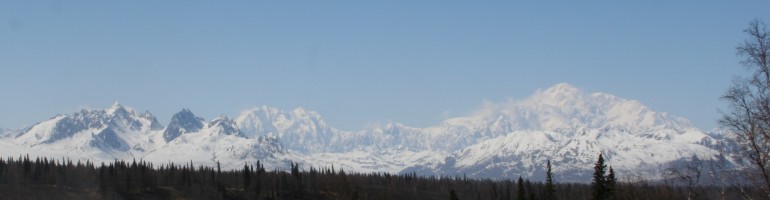
And then, walking on the lake shore with Aubrey the next morning, with the storm sky still broiling black in the east but the lake painted in strips of turquoise and blue under the bright fall sun and whitecaps across the margin of the sky like so many million seagulls ridding the churn. And the lakeshore beaches and paths with only a scattering of Saturday morning city dwellers willing to brave the first truly cold wind of the season with their dogs or their ipods and running shoes. I wanted to cry with the weight of it. Because the emotions I was feeling were the same emotions I felt in Seward, kayaking under the stone cliffs of the fjord, eagles perched above, black depths sweeping past under my paddle, eternal summer sun painting the high snows just out of reach. The screaming ache of something, something bigger. But unlike my early years in the city, still steeped in childhood and Wheaton, I no longer think that this powerful grip of emotion is God.
I remember struggling with this when I lived in Seward. Up to that point, I would have attributed this tumult of emotion to some powerful, divinely propelled awareness of the presence of a greater power, a power that made all this just for the joy and creativity of it, or to give the humans he’d created in the bargain some kind of pleasure and awareness of his immense power and spur them to worship, to compel awe. But in Seward, while still struggling to shake that context of being in the world like a bad dream, the kind that that keeps bothering you well into the day when you have moved past the early confusion waking, I was beginning to believe, instead, that this feeling was the essence of being in touch with – of being aware in some metaphysical sense – of one’s place as a human in the world in all its improbability and inevitability, that knowing one’s context as a tiny breathing speck under the mountains, no more or less significant than the eagle watching the channels for salmon, or the starfish clinging to the low-tide rocks slick with kelp, or the huge costal spruce towering on the edges of the sea cliffs, and no more or less fragile, is the thing. This kind of awe, the awe of being so small and vulnerable, yet part of such an immense, living, breathing earth, of being both an aware piece of it yet so irrelevant to its continuation as a bigger system of breathing, changing, swirling life; that is how I began experiencing awe in Seward in those early days apart from the church.
And it is the exact same feeling of awe that struck me that first night, driving into the city. But I realized then that they are the same feeling. Just interpreted in very different ways, with, I believe, very different ends in some ways. And I don’t know, still, if my old understanding of that feeling or the new one is right or true. I only know that I have that feeling still, churning away somewhere behind my ribs, making it a little hard to breathe through the sunset painted under the clouds last night above the endless horizon of shops and sidewalks and asphalt and humans and graveyards and weeds and blowing trash and taxis all rolling out before us as we cruised to dinner.
It is that disparity in thought, I think, brought to bear for the first time since I’ve come to terms with leaving the church and my history there that has left me feeling so settled and rootless at once.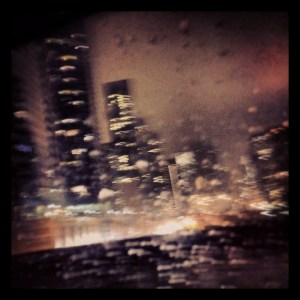
So maybe that is part of it, too.
 entelechyproject